

Many patients with missing teeth hesitate to receive dental implant treatment due to unfamiliarity with the surgical process. Experts from Pujing Dental Clinic fully explain the standard implant procedure to help patients understand the treatment clearly and eliminate concerns.
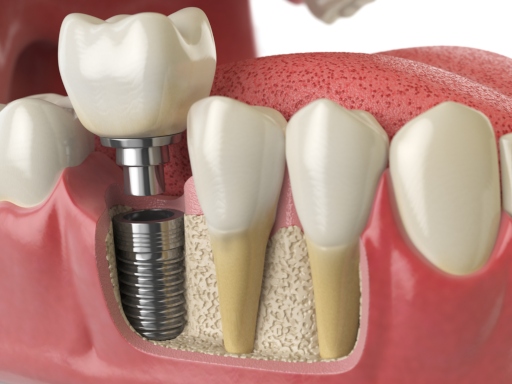
Six Complete Steps of Dental Implant Treatment
1. Comprehensive Preoperative Examination
We conduct full physical examinations and professional oral inspections. X-rays or CBCT scans are taken to evaluate alveolar bone volume and bone density. Physical indicators including blood pressure and blood sugar are tested to rule out surgical contraindications and confirm eligibility for implant surgery.
2. Personalized Implant Plan Design
Based on your oral condition and overall health status, our team uses digital equipment to customize an exclusive implant solution, select the most suitable implant fixtures, and complete all preoperative preparations.
3. Implant Placement (First-stage Surgery)
In accordance with the digital treatment plan, implants are precisely placed into the alveolar bone at the missing tooth area. Sutures are removed approximately 14 days after surgery. Original transitional dentures can be worn again after professional evaluation and approval.
4. Healing Abutment Installation (Second-stage Surgery)
After 1 to 3 months of healing, the implant achieves stable osseointegration with the jawbone. A minimal gingival incision is made to expose the top of the implant, and a healing abutment is installed to shape the gingival tissue naturally.
5. Final Dental Crown Installation
Seven to ten days after abutment placement, oral impressions are taken to customize porcelain or all-ceramic crowns and implant bridges. The prosthetic production cycle takes 10 to 14 days. After fitting and adjustment, the final implant restoration is completed to restore normal chewing function.
6. Regular Re-examination and Daily Maintenance
Implant treatment does not end after crown installation. Regular clinical check-ups and standard daily oral hygiene maintenance are essential to help maintain long-term stability and extend the service life of dental implants.
Three Core Advantages of Minimally Invasive Implant Technology
Pujing Dental introduces advanced 3D digital minimally invasive implant technology, greatly improving the safety, accuracy and comfort of implant treatment:
1. Ultra-small Incision and Minimal Bleeding
Adopting circumferential gingival minimally invasive surgery, the operation creates tiny wounds with low bleeding volume. Postoperative swelling and pain are mild, wounds heal rapidly, and the surgical field of view is clear and precise.
2. Lower Risk of Swelling and Infection
Precise intraoperative management effectively reduces postoperative swelling and infection risks, providing a stable and healthy healing environment for implants. The technique is also applicable for immediate implant restoration.
3. Short Recovery Period with Little Life Impact
Professional biological stimulation accelerates postoperative recovery and shortens healing time, minimizing disturbances to daily life and diet. Long-term standardized maintenance effectively prevents peri-implant inflammation and significantly prolongs implant lifespan.