

Procedure
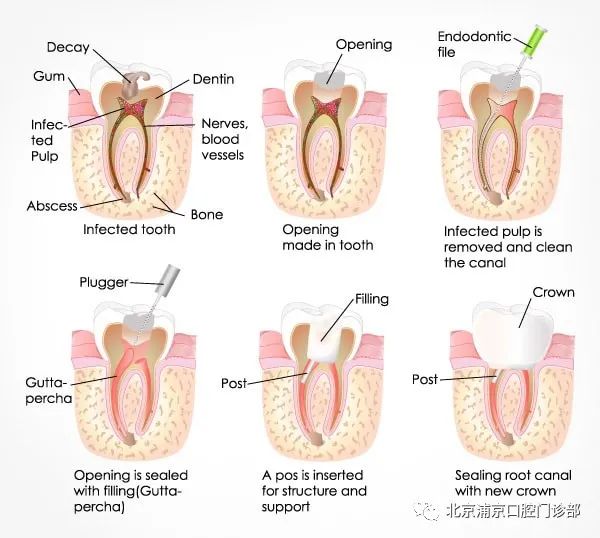
1. Take X‑rays to evaluate the structure of the affected tooth and confirm the treatment plan.
2. Local anesthesia will be administered if the pulp is vital. If the pulp is necrotic, anesthesia may not be required, depending on the patient’s condition.
3. Remove decayed tooth structure and gain access to the pulp chamber.
4. Open the pulp chamber and remove inflamed or necrotic pulp tissue.
5. Use root‑canal files to eliminate infection and shape/enlarge the canals for proper sealing.
6. Rinse the interior of root canal alternately with disinfectant (such as sodium hypochlorite or 3% hydrogen peroxide) and normal saline.
7. Fill the root canals with gutta‑percha points to maintain a sealed, sterile environment.
8. Restore the cavity with dental materials including resin, glass ionomer or amalgam, based on the extent of tooth loss and tooth position.
9. Teeth become brittle after pulp removal. A dental crown is usually placed to protect the treated tooth and prevent fracture.
Advantages
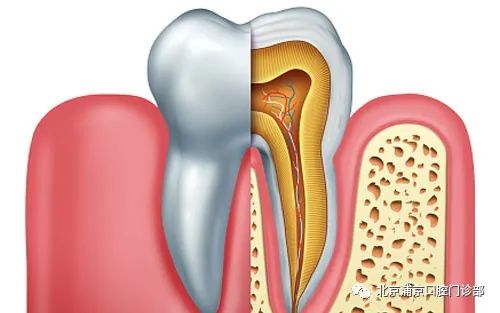
Pathologically, pulpitis and pulp necrosis caused by tooth decay are inflammatory responses to bacterial infection, not normal immune behavior. As decay progresses, bacteria invade the pulp and cause inflammation. Without treatment, infection can spread to the area around the root tip and may even enter the bloodstream.
Root canal treatment treats and prevents periapical inflammation, eliminates infection, and relieves pain and other symptoms.
As a tooth‑preserving procedure, similar to fillings and crowns, the goal of root canal therapy is to save and restore natural teeth.
Root canal treatment has a success rate of over 90%. Even in rare cases of failure, periapical lesions are usually contained by the immune system and do not spread widely.

Disadvantages
The procedure is complex. Standard treatment generally requires 2 to 4 appointments and takes longer overall. However, endodontists can often complete treatment in a single visit, usually within one hour.
The treatment cost varies depending on the tooth position, the number of root canals, and the treatment plan, and is usually charged based on the number of root canals. Although the cost is not low, compared with the follow-up treatment derived from tooth extraction, root canal treatment is still relatively economical, and the subsequent maintenance cost is low.
For specific treatment plans, please consult a qualified dental professional.