

Parents used to pay attention to their children's dental problems, mostly whether they had decayed teeth, whether they would have loose teeth, toothache and other conditions. With the improvement of living standards and aesthetics, orthodontics for children has increasingly become a new issue of concern to parents.
Orthodontics is to restore the irregularly arranged teeth and jaws to normal through certain means, to improve appearance and restore the normal function of teeth. When is the ideal time to do orthodontics for children?
Parents should ask an orthodontist to make an assessment when their child is about 4 years old. If there is a problem, they should grasp the three golden periods of orthodontics and have their teeth fixed as soon as possible. Don't miss the opportunity, or you may regret it.
The first golden period: deciduous teeth (3‑5 years old)
At this stage, the first growing deciduous teeth can guide the growth of permanent teeth. If parents find that the development of deciduous teeth is abnormal, or tends to hinder the growth of permanent teeth, they can consider early orthodontic intervention.
During the deciduous tooth period, any factor that is not conducive to the normal growth and development of the whole body and local oral cavity may lead to abnormal tooth development, eruption, arrangement and occlusion, resulting in abnormal jaw and face development and affecting facial beauty. For example, in the case of deciduous teeth cross‑bite (commonly known as "underbite"), it should be corrected in time, which is conducive to the development of maxilla and the prevention of permanent teeth cross‑bite. If the child has bad habits (such as tongue‑thrusting, lip‑biting, etc.), it should also be timely reminded and corrected to prevent malocclusion.
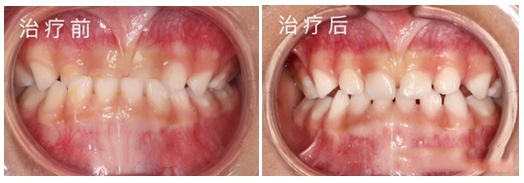
The second golden period: mixed dentition (girls 8‑10 years old, boys 9‑12 years old)
This stage is the pre‑puberty and peak of the child's growth and development. If there is functional or skeletal malocclusion, treatment at this stage can make full use of the growth potential of the jaw, achieve the treatment purpose by promoting or inhibiting the growth of the jaw, and is more beneficial to improving the child's facial morphology and function.
In the mixed dentition stage, if the child has bad habits such as lip‑biting, tongue‑thrusting, and forward jaw displacement, it is easy to cause abnormal face shape or abnormal tooth arrangement.
However, parents don't have to worry too much. At this stage, children's permanent teeth and deciduous teeth are replaced quickly, and the displacement speed of alveolar bone is also faster. Therefore, bring the child to the hospital in time for an orthodontist's examination. As long as it is found early, it can still be corrected quickly and effectively.
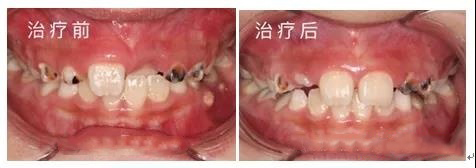
The third golden period: early permanent dentition (girls 11‑14 years old, boys 13‑16 years old)
At this stage, most of the children's permanent teeth have sprouted, the development of dental arch has been basically completed, and the uneven teeth have been basically shaped. However, maxillofacial tissues are still in a vigorous growth state, and the development of maxillofacial region is still in the rapid stage of growth and development. Even if there is dentition problem, it is still in the initial stage. To a great extent, orthodontics needs to make use of the growth and development potential of the maxillofacial region to achieve an ideal level of tooth movement and alveolar reconstruction.
Therefore, this stage is not only conducive to tooth movement, but also some minor jaw development problems may be improved. Adolescent children begin to have higher requirements for beauty. If their teeth are uneven, it may affect their mental health. The relationship between the teeth and jaw bones of children in this age group can be changed after correction, and a stable therapeutic effect can be obtained.
In daily life, when the child has the following symptoms, parents should pay attention to and seek medical treatment as soon as possible: the mouth is often open to breathe; crowded teeth and abnormal dentition; obvious buckteeth and underbite; inability to roll the tongue normally, etc.
If you have any questions, please feel free to consult Pujing dental clinic 400‑0650‑898