

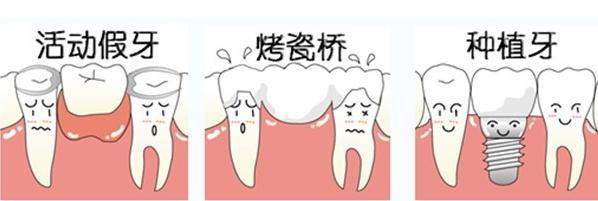
Denture restoration has a long‑standing history and is well‑known to many people. With the emergence of dental implant technology, this restoration method has been widely adopted. What exactly are the differences between denture restoration and dental implants? Let's hear the doctor's explanation.
1. What is a dental implant?
Dental implant technology adopts medical methods. Pure titanium metal with high osseointegration compatibility with human bone is precisely designed and fabricated into cylinders or other shapes mimicking natural tooth roots. These are surgically placed into the alveolar bone of the edentulous area. After 1‑3 months, once the artificial root integrates firmly with the alveolar bone, a porcelain‑fused‑to‑metal crown will be attached onto the artificial root. Being non‑destructive to adjacent teeth, dental implants are widely recognized in stomatology as a preferred restoration option for missing teeth, known as "the third set of human teeth".
2. What is denture restoration?
Denture restoration selects suitable prostheses based on the patient's general health and intra‑oral conditions. It restores chewing function and aesthetics, while protecting the health of other oral tissues. Dentures fall into two categories: fixed dentures and removable dentures, commonly referred to as "fixed teeth" and "removable teeth".
3. Differences between dental implants and denture restoration
Traditional denture restoration is a form of prosthetic treatment, fixed by mucosal adsorption or external retention, and divided into fixed and removable types. Fixed dentures use metal crowns and are supported by adjacent natural teeth as abutments. Removable dentures, such as complete dentures, are retained by mucosal adsorption; some removable dentures are secured by metal wire clasps.
For dental implants, titanium‑alloy fixtures with good tissue biocompatibility are implanted into the alveolar bone, on top of which prosthetic crowns are installed. Compared with traditional denture restoration, dental implants are durable, applicable for a wide range of cases and preserve adjacent natural teeth. In terms of cost, dental implants are more expensive mainly due to the cost of titanium‑alloy materials. Traditional denture restoration carries risks of irritating the pulp when preparing adjacent teeth; dental implants themselves do not involve the pulp of natural teeth.
Key differences between dental implants and denture restoration are listed below:
(1) Dental implants deliver far higher chewing efficiency than conventional dentures with little foreign‑body sensation, behaving much like natural teeth.
(2) Denture restoration has no artificial root support. For dental implants, artificial roots (fixtures) are surgically inserted into the edentulous site. After 3‑6 months of osseointegration, crowns with shape and texture similar to natural teeth are mounted.
(3) Long service life. With proper after‑care, dental implants can serve for a long time.
(4) Preservation of adjacent teeth. Unlike conventional dentures, dental implants spare neighbouring natural teeth. If problems occur later, they are usually limited to the single implant and will not affect surrounding healthy teeth.