
Minimally Invasive Dental Implant
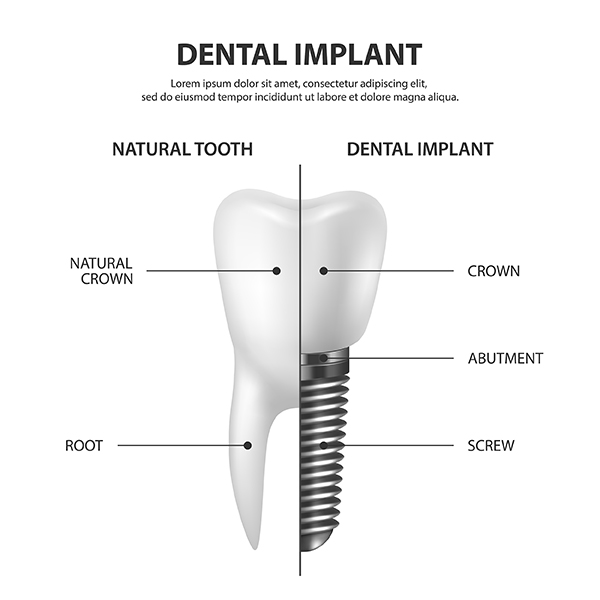
Minimally-Invasive Dental Implant applies minimally-invasive techniques to dental implantation. Based on conventional implant surgery, special surgical protocols and graftless-solution techniques are used for fixture placement. A tiny incision of 3-4 mm is made to insert the artificial root into the jawbone. This procedure eliminates the traditional steps of gingival flap elevation, suturing and suture removal, minimizing surgical trauma. It greatly reduces post-operative swelling, pain and bleeding, shortens the operation time significantly (a single implant placement only takes 15-30 minutes), lowers the risk of infection, and results in barely noticeable pain or swelling after treatment. It is a widely-adopted implant procedure around the world.
Advantages
1. Excellent stability and retention: No clasps or crown-work used in conventional dentures are required. The artificial root fuses tightly with the alveolar bone and anchors in-place just like a natural tooth, delivering strong retention and stability.
2. Superior aesthetics: The dental crown is custom-made according to the patient’s facial features, as well as the shape and shade of remaining natural teeth, to achieve optimum overall harmony and appearance.
3. Strong masticatory performance: It efficiently restores tooth function, with chewing capacity far superior to that of other conventional dentures.
4. No preparation of adjacent teeth: Restoration is supported by its own artificial root, with no need to grind neighbouring healthy teeth, causing zero damage to natural dentition. If osseointegration fails, the implant can be removed. Re-implantation may be performed once bone healing is complete, or alternative restoration plans can be adopted.
5. Straightforward procedure: The minimally-invasive surgery is carried out under local anaesthesia. Implant placement generally takes from dozens of minutes to several hours. The implant fixture is made of biomaterial with excellent biocompatibility and produces no adverse side-effects to the human body. In cases of failed osseointegration, the implant can be extracted.
6. Comfort and convenience: No denture base or clasps required for removable dentures. There is no foreign-body sensation inside the mouth. The restoration is highly comfortable and convenient, and facilitates good oral-hygiene maintenance.
Pujing Dental reminds you that minimally-invasive dental implantation is not suitable for everyone.
Since an incision must be made on the gingiva for minimally-invasive implant surgery, this treatment is contra-indicated for certain patients. For instance, some periodontal-disease patients have very little attached keratinized gingiva and are therefore unsuitable for this procedure. Every patient’s candidacy for minimally-invasive implants must be carefully evaluated by a qualified dentist.For minimally-invasive implant surgery, it is critical to properly manage the hard and soft-tissue conditions around the implant fixture. The success rate of the surgery depends on the clinician’s expertise, clinical experience and the quality of the clinic-side equipment.